
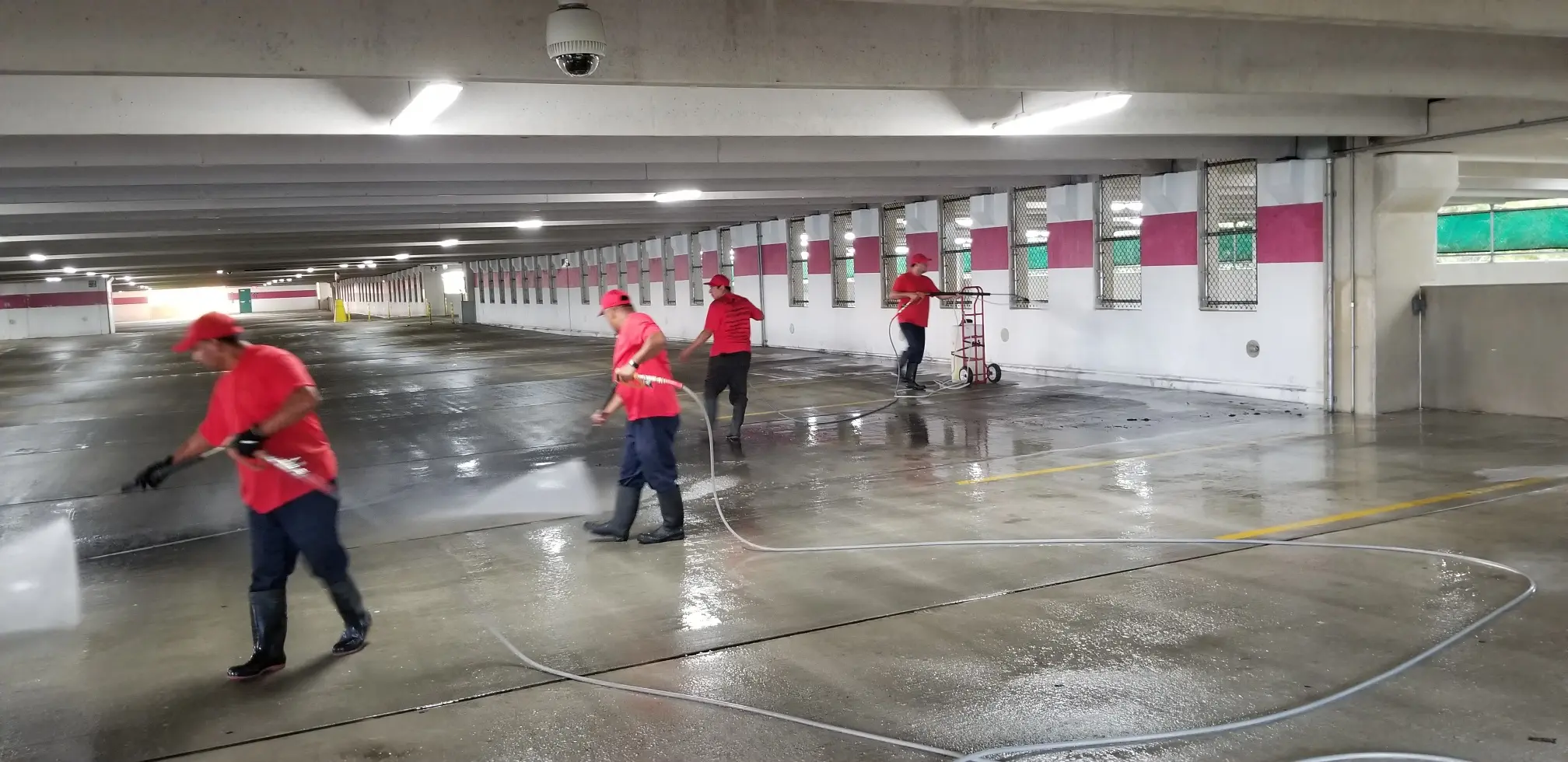
When you hire a commercial power washing company, one of the most important questions to ask is: "Does your equipment have hot water capability?" The difference between hot water and cold water pressure washing is not a minor detail — it determines what soiling you can actually remove.
How Water Temperature Changes Everything
Cold water pressure washing relies almost entirely on mechanical force — the impact of high-pressure water breaking soiling away from surfaces. At 4,000 PSI, cold water is highly effective at removing loose dirt, dust, dried debris, and surface staining.
Hot water pressure washing adds heat — typically 160–200°F — which fundamentally changes the chemistry of cleaning:
- Grease and oil become liquid — hot water melts the molecular bonds that hold petroleum-based soiling to surfaces, allowing it to be rinsed away rather than pushed around
- Organic material breaks down faster — mold, mildew, algae, and biofilm respond dramatically better to hot water treatment
- Less chemical needed — hot water does more work, reducing the amount of degreaser or detergent required
- Better results on porous surfaces — concrete, brick, and masonry open their pores in heat, allowing more thorough cleaning
When Hot Water Is Required
| Soiling Type | Cold Water | Hot Water |
|---|---|---|
| Loose dirt and dust | ✅ Effective | ✅ Effective |
| Dried debris and leaves | ✅ Effective | ✅ Effective |
| Mold and mildew | ⚠️ Partial | ✅ Superior |
| Motor oil and petroleum | ❌ Limited | ✅ Required |
| Kitchen grease and fryer oil | ❌ Ineffective | ✅ Required |
| Tire marks and rubber | ⚠️ Partial | ✅ Superior |
| Heavy organic staining | ⚠️ Partial | ✅ Superior |
| Gum removal | ⚠️ Difficult | ✅ Steam preferred |
Restaurant Exteriors and Drive-Thrus
Cooking grease from exhaust systems, fryer vents, and kitchen loading areas is one of the most challenging soiling types in commercial cleaning. Cold water washing at any pressure cannot remove congealed cooking grease from concrete — the grease simply re-solidifies. Hot water emulsifies grease, allowing it to be rinsed away cleanly. This is non-negotiable for any restaurant exterior cleaning program.
Parking Garages and Loading Docks
Motor oil, transmission fluid, hydraulic fluid, and other petroleum products accumulate rapidly on parking garage floors and loading dock approaches. These materials are insoluble in cold water. Hot water with commercial degreaser is required to achieve meaningful stain reduction — not cosmetic improvement, but actual oil removal.
Dumpster Pad Areas
Organic waste decomposition produces some of the most challenging soiling found on commercial properties. The combination of fats, proteins, sugars, and organic acids from food waste bonds powerfully to concrete. Hot water is essential for effective dumpster pad cleaning and odor elimination.
⚠️ Ask before you hire: Many pressure washing companies operate cold-water units only. If you have grease, oil, or heavy organic soiling, confirm that your contractor has genuine hot water capability — not just a chemical injection system.
Our Equipment
Our primary commercial unit is a 24.8 HP Kubota diesel engine delivering 4,000 PSI at 8.9 GPM with an on-board hot water heating system reaching 200°F. This allows us to match water temperature to the specific soiling type on your property — cold water for general surface cleaning, hot water for grease removal, organic staining, and heavy biological growth.
This isn't residential equipment. It's the same class of equipment used by Bay Area parking authorities, industrial facility managers, and commercial property management companies who need consistent, professional results.