
Most restaurant operators focus heavily on kitchen hygiene, food storage, and indoor cleanliness for health inspections — and rightly so. But Bay Area health inspectors from San Francisco DPH, Santa Clara County, and other local agencies increasingly evaluate exterior areas as part of routine inspections. Failing an inspection due to exterior conditions is entirely preventable.
What Health Inspectors Evaluate Outside
Grease Accumulation on Exterior Surfaces
Kitchen exhaust systems vent cooking grease into the air, and that grease settles on exterior walls, roofs, and paved areas surrounding the building. Accumulated grease is a fire hazard, an odor source, and a health concern that inspectors specifically look for. In California, grease accumulation in certain concentrations near cooking operations is a direct violation under CBSC and local health codes.
Dumpster and Trash Enclosure Areas
Dumpster pads and enclosures are among the most common exterior health code failure points for Bay Area restaurants. Requirements typically include:
- Dumpster pad must be cleanable and kept clean
- Drainage must be adequate — standing water and pooled grease are violations
- Enclosure walls and gates must be maintained
- No evidence of pest activity in or around the enclosure
Drive-Thru Lanes and Service Windows
Drive-thru lanes accumulate food debris, beverage spills, and exhaust residue rapidly. Service window surrounds and menu board areas develop grease and grime buildup that inspectors evaluate under exterior facility maintenance standards.
Outdoor Dining and Patio Areas
For restaurants with outdoor seating — increasingly common across Bay Area cities — inspectors evaluate the cleanliness of patio surfaces, furniture, and surrounding areas. Food debris, bird droppings, and mold on outdoor surfaces are citable violations.
🔴 Inspection timing matters: Many Bay Area health inspectors conduct exterior evaluations at the beginning of inspections, before entering the building. The exterior condition sets the inspector's expectations and tone for everything that follows. A visibly neglected exterior signals poor overall maintenance standards.
The Grease Removal Challenge
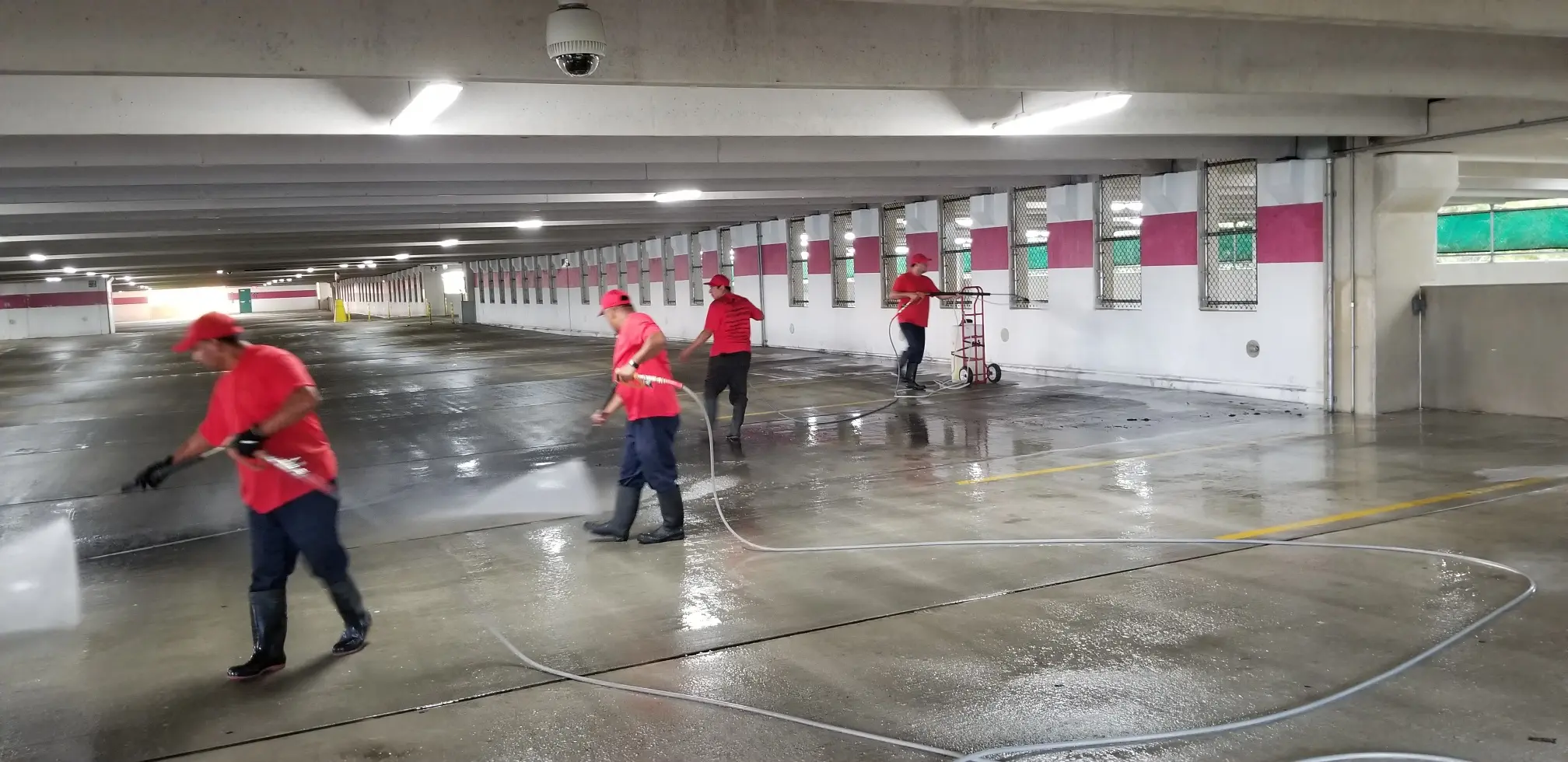
Restaurant grease is among the most challenging soiling types in commercial cleaning. Standard cold-water pressure washing cannot remove congealed cooking grease — the grease temporarily moves but re-solidifies as it cools. Effective restaurant exterior cleaning requires:
- Hot water at 160–200°F to emulsify and liquefy grease
- Commercial degreaser pre-treatment with adequate dwell time
- High-pressure application for mechanical removal of emulsified material
- Proper wastewater containment — grease-contaminated water requires compliant disposal
Recommended Cleaning Schedule for Bay Area Restaurants
| Area | Frequency | Notes |
|---|---|---|
| Dumpster pad and enclosure | Monthly | More frequent in summer and for high-volume operations |
| Kitchen exhaust area / grease trap surrounds | Monthly | Depends on volume; some need bi-weekly |
| Drive-thru lanes | Monthly | Surface cleaner recommended for concrete |
| Entrance and storefront | Monthly – Quarterly | Downtown locations need more frequent service |
| Patio and outdoor dining | Before season + monthly in-season | Power wash + sanitize before patio opening |
| Full exterior wash | Bi-annual | Spring and fall deep cleaning |
Documentation for Compliance
We provide service completion documentation for all restaurant cleaning programs — useful if an inspector asks about your exterior maintenance history. A documented regular cleaning program demonstrates proactive compliance and can mitigate the severity of any violations found.
If you've recently received a health code violation related to exterior conditions, we can help you resolve it quickly. We're experienced with compliance cleaning timelines and can typically schedule emergency service within 24–48 hours throughout the Bay Area.