
Property managers oversee dozens of exterior surfaces across multiple properties simultaneously — and commercial power washing is one of those maintenance categories that seems simple but has significant complexity underneath. Getting it right means better tenant retention, reduced liability, lower long-term maintenance costs, and properties that make a strong first impression year-round.
What Property Managers Should Require from Any Power Washing Vendor
1. Proof of Insurance Before Every Job
This is non-negotiable. A commercial power washing operation involves high-pressure equipment, chemical applications, water runoff, and technicians working in proximity to tenants, customers, and vehicles. Any vendor without comprehensive general liability insurance (minimum $1M per occurrence) and workers compensation coverage exposes you and your property owner to direct liability.
Request a Certificate of Insurance (COI) naming your management company or property owner as additional insured. Any reputable contractor provides this immediately — if there's hesitation, walk away.
2. OSHA Compliance Documentation
Commercial cleaning operations have specific OSHA requirements around chemical handling, PPE, and wastewater management. Ask vendors to confirm their OSHA compliance program. In California, wastewater from commercial cleaning operations cannot simply run into storm drains — there are regulations around containment and disposal, particularly for chemical and petroleum-contaminated water.
3. Commercial-Grade Equipment
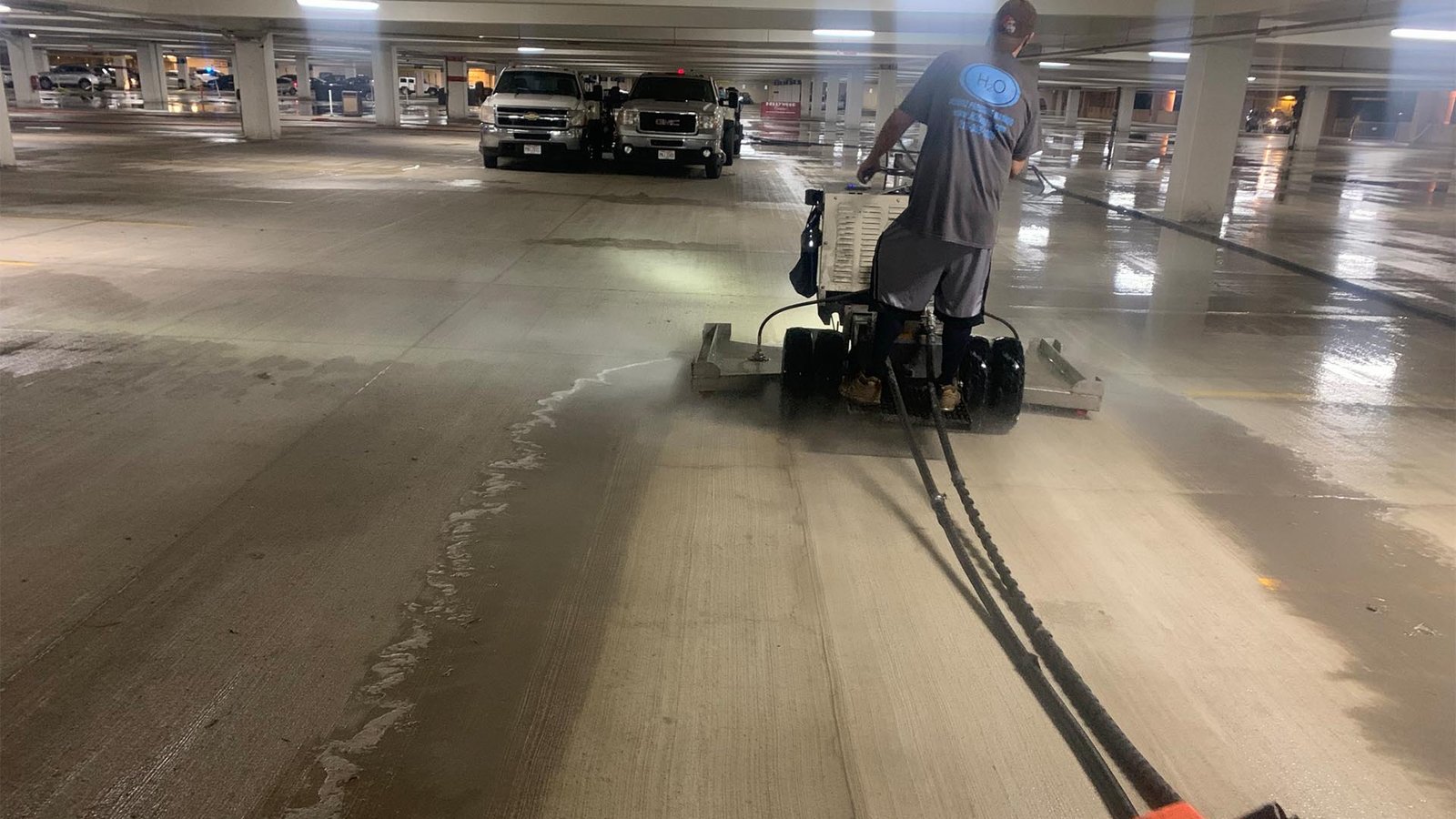
There is a significant difference between commercial power washing equipment and consumer/prosumer equipment available at hardware stores. Ask specifically about PSI rating, GPM flow, and whether the unit has hot water capability. For parking garages, loading docks, and grease-affected surfaces, hot water is required for meaningful results — not cosmetic improvement.
4. References from Similar Properties
A vendor who has experience with retail centers should be able to reference other retail centers. A parking garage specialist should be able to cite garage projects. Experience matters significantly in commercial power washing — different surface types and soiling profiles require different knowledge and techniques.
Structuring a Multi-Property Program
Property managers with multiple properties can realize significant cost savings by consolidating power washing with a single vendor through a multi-property program. Benefits include:
- Volume pricing — per-service costs typically 15–25% lower than individual property one-off pricing
- Priority scheduling — preferred scheduling windows for all properties
- Single invoice — simplified accounting and vendor management
- Consistent documentation — uniform service reports across all properties
- Vendor familiarity — crew knows your properties and their specific requirements
What to Include in Your Service Agreement
| Element | What to Specify |
|---|---|
| Scope of work | Exact surfaces, square footage, and specific services at each location |
| Service frequency | Schedule by surface type and property (quarterly parking, monthly storefronts, etc.) |
| Scheduling parameters | After-hours, weekend, or specific time windows |
| Insurance requirements | Coverage minimums and additional insured language |
| Documentation | Service completion reports, before/after photos when applicable |
| Response time | Emergency/reactive response for graffiti, spills, and weather events |
| Chemical compliance | California-compliant products, wastewater containment |
| Pricing terms | Fixed pricing period, change order process, emergency service rates |
Budgeting Power Washing as a Capital Expense
One of the most impactful shifts property managers can make is moving power washing from a reactive, unbudgeted expense to a planned capital expenditure. Properties on regular cleaning programs typically spend:
- Retail centers: $0.02–0.06 per square foot per year on regular exterior cleaning
- Parking structures: $0.15–0.35 per square foot per year for quarterly garage cleaning
- Office buildings: $500–$3,000 per year for bi-annual exterior washing
These costs are predictable and budgetable — and they prevent the much larger reactive costs that come from deferred maintenance: stain removal that requires multiple treatments, surface damage from unchecked biological growth, and liability incidents from slippery surfaces.
📋 Pro tip for RFPs: When issuing RFPs for commercial power washing services, require vendors to submit their insurance documentation, equipment specifications, and at least three references from similar property types with the initial proposal. It filters out unqualified bidders immediately and gives you a genuine comparison basis.
Working with Main Street Power Washing
General Cleaning Solutions, Inc. has been serving Bay Area property managers for 26 years. We understand the institutional requirements of professional property management — COIs, after-hours scheduling, service documentation, and consistent communication. We work with HOAs, retail center managers, parking operators, and commercial property management companies throughout all 39 Bay Area cities.