
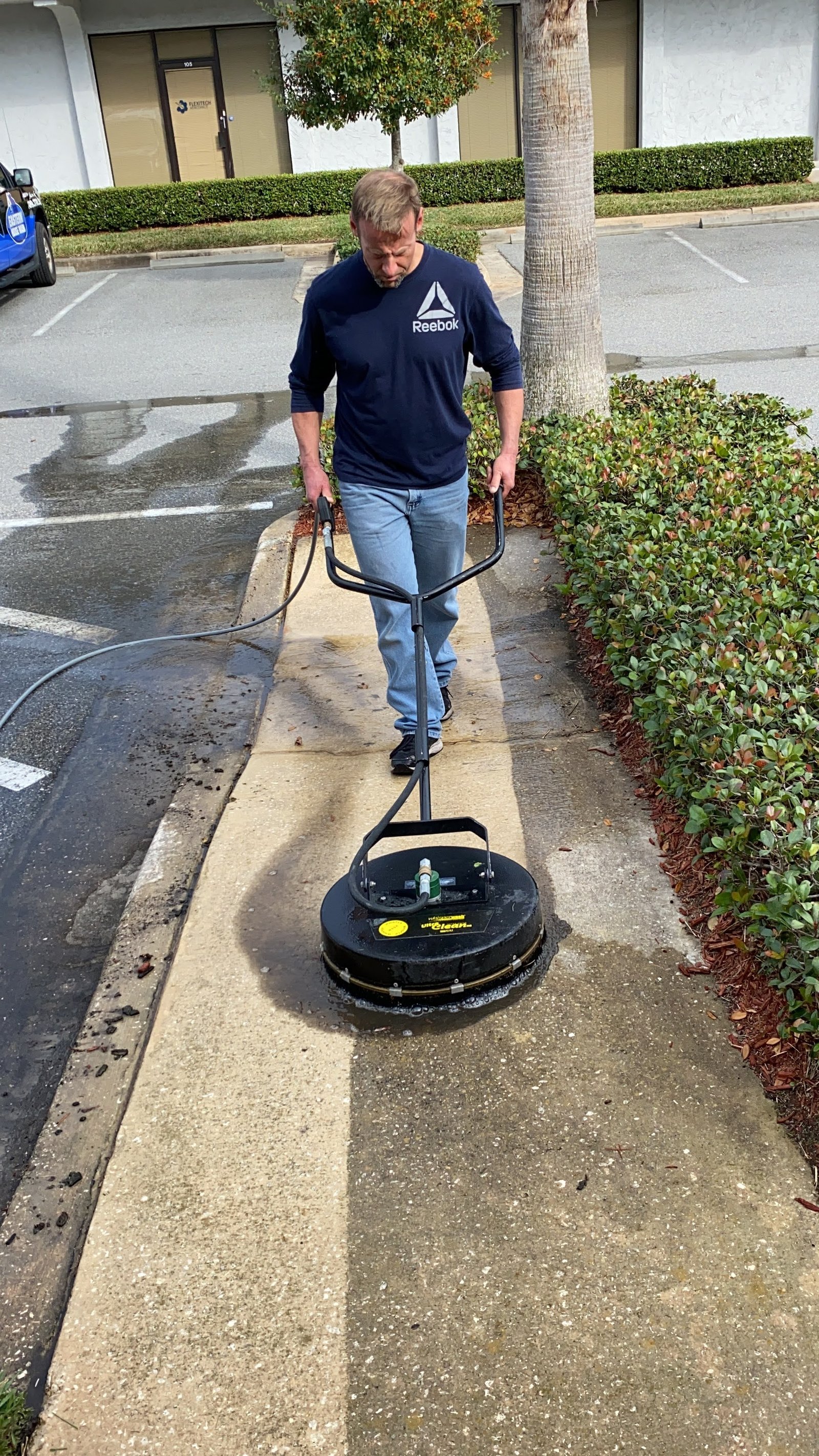
One of the most common questions we hear from Bay Area property managers and business owners is: "How often do we actually need commercial power washing?" The honest answer is that it depends — but there are clear frameworks that help you determine the right schedule for your specific property.
Why "Once a Year" Is Almost Never Enough
Bay Area commercial properties face a combination of environmental factors that accelerate soiling faster than most owners realize. The marine layer deposits salt and mineral film. Spring pollen coats surfaces from March through May. Summer traffic generates tire rubber and petroleum residue. Wildfire season drops ash and particulates. Rain brings mud and hard water mineral deposits. In most Bay Area locations, surfaces that haven't been cleaned in 12 months show visible, measurable deterioration.
The cumulative effect matters: soiling that builds up over 12 months is significantly harder and more expensive to remove than soiling cleaned every quarter. Regular maintenance is almost always more cost-effective than reactive deep cleaning.
Recommended Cleaning Frequency by Property Type
| Property Type | Recommended Frequency | Primary Reason |
|---|---|---|
| High-traffic retail storefront | Monthly – Quarterly | Customer first impression, gum/grime buildup |
| Restaurant exterior / drive-thru | Monthly | Grease accumulation, health code, odor |
| Parking garage | Quarterly – Bi-annual | Oil stains, tire marks, drain maintenance |
| Office building exterior | Bi-annual – Annual | Algae, mildew, pollution stains |
| Shopping center common areas | Quarterly | Tenant satisfaction, property value |
| Apartment / HOA common areas | Bi-annual – Quarterly | Resident satisfaction, curb appeal |
| Government / municipal facilities | Quarterly – Bi-annual | Public standards, contract compliance |
| Industrial / warehouse exterior | Annual – Bi-annual | Oil, grime, regulatory compliance |
Location Factors That Increase Frequency
Coastal Properties (SF, Peninsula, East Bay Flatlands)
Marine layer and salt air deposit a mineral film on all exterior surfaces. Properties within 5 miles of the bay or ocean typically need 30–50% more frequent cleaning than inland properties with similar foot traffic.
High-Traffic Pedestrian Areas
Downtown San Francisco, Oakland, and San Jose commercial corridors see dramatically more foot traffic than suburban properties. More foot traffic means faster gum accumulation, more cigarette debris, and quicker soiling of sidewalks and entryways. Monthly sidewalk cleaning is standard for most downtown retail.
Near Freeway or High-Traffic Roads
Properties near Highway 101, 880, 280, or major arterials receive significantly more vehicle exhaust particulates, tire rubber, and petroleum aerosol deposits. Building facades facing major roads accumulate staining faster than those in quieter locations.
Properties with Tree Canopy
Bay Area eucalyptus, oak, and pine trees drop sap, pollen, leaves, and organic debris. Properties with significant tree canopy overhead — common across Palo Alto, Berkeley, Los Gatos, and Sausalito — need more frequent cleaning to manage the ongoing organic accumulation.
🏢 Property Manager Tip: Build power washing into your annual maintenance budget as a line item, not a reactive expense. Quarterly cleaning programs are typically 20–30% cheaper per visit than one-off reactive cleans — and they keep your property consistently presentable rather than alternating between clean and neglected.
The True Cost of Deferring Cleaning
Beyond appearance, deferred cleaning creates tangible financial consequences:
- Tenant retention: Commercial tenants cite building appearance among top factors in lease renewal decisions. A neglected exterior signals poor property management.
- Liability exposure: Slippery algae on sidewalks, accumulated grease near restaurant entries, and deteriorating lot surfaces create slip-and-fall liability that far exceeds cleaning costs.
- Surface damage: Concrete and masonry that aren't cleaned regularly develop staining and biological growth that becomes progressively harder and more expensive to remove. Some staining becomes permanent.
- Pest attraction: Food debris and organic accumulation in uncleaned areas attract pests — a problem that cascades into far more expensive remediation.
How to Build Your Cleaning Schedule
- Identify your highest-traffic surfaces — storefronts, entryways, and parking areas first
- Consider your location factors — coastal, downtown, near trees, near freeways
- Set a minimum quarterly baseline for all exterior common areas
- Add reactive cleaning triggers — after wildfire events, after significant weather, after graffiti incidents
- Get custom pricing for a scheduled program — programmatic pricing is always better than reactive one-off pricing
We work with Bay Area property managers to build custom cleaning schedules that keep properties consistently clean at the lowest annual cost. Call us for a free property assessment and program recommendation.