
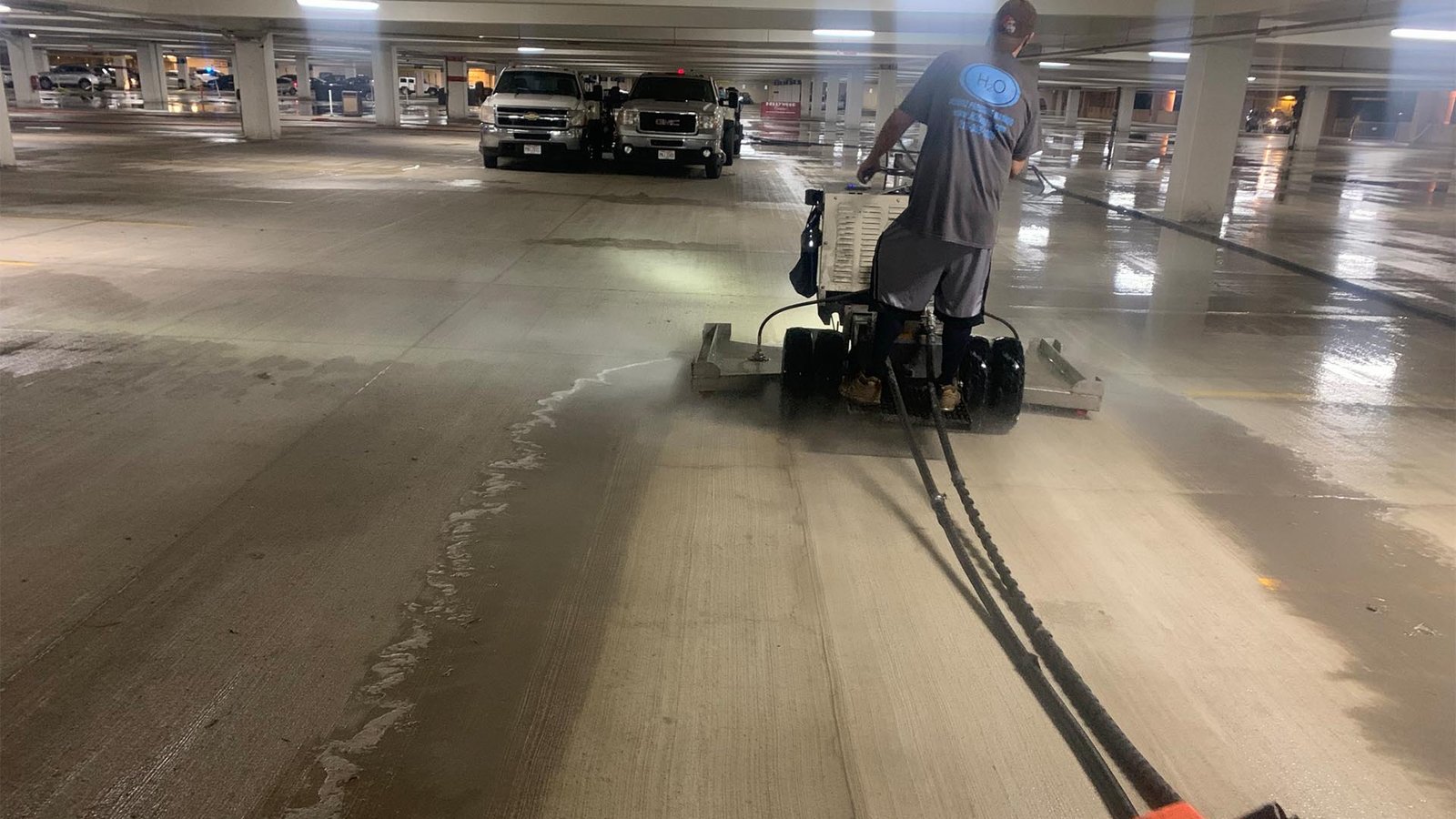
Parking garages are among the most demanding commercial cleaning environments in Bay Area property management. They accumulate oil, grease, tire rubber, vehicle fluids, and human waste at a scale that makes other commercial surfaces look manageable by comparison. And because parking garages are often underground or enclosed, the soiling is concentrated and the cleaning logistics are complex.
General Cleaning Solutions, Inc. has performed major parking garage cleaning projects throughout San Francisco and the Bay Area — including Moscone Center, Civic Center Parking Garage, Fifth & Mission Garage, Japan Town Garage, and the Performing Arts Garage. Here's what 26 years of garage cleaning experience has taught us.
Why Parking Garages Need Professional Cleaning
Oil and Fluid Accumulation
A multi-level parking garage handling 500+ vehicles per day can accumulate gallons of petroleum products on its concrete decks weekly. Motor oil, transmission fluid, power steering fluid, brake fluid, and coolant all make their way from vehicle undercarriages to concrete floors continuously. Unchecked, this creates:
- Slip hazards that represent direct liability exposure
- Staining that becomes permanent if not treated within the first few months
- Environmental non-compliance risk as petroleum runoff enters storm drainage
- Odor problems that drive away customers and tenants
Stairwell and Elevator Lobby Neglect
The most-used areas of a parking garage — stairwells, elevator lobbies, and pedestrian pathways — are often the least cleaned. These areas accumulate biological staining, litter, and grime that degrades the customer experience and creates safety hazards.
Equipment Requirements for Garage Cleaning
Effective parking garage cleaning requires:
- High-flow equipment — 4,000+ PSI with 8+ GPM flow rate to move significant water volume across large flat surfaces
- Hot water capability — essential for petroleum stain treatment; cold water cannot remove oil from porous concrete
- Commercial surface cleaners — rotary surface cleaning attachments for efficient flat surface cleaning with consistent coverage
- Wastewater containment — California environmental regulations require that petroleum and chemical-contaminated water be contained and properly disposed of, not allowed to enter storm drains
- Battery or propane equipment — for enclosed lower levels where diesel exhaust accumulation is a health concern
Recommended Cleaning Program by Garage Type
| Garage Type | Frequency | Scope |
|---|---|---|
| High-volume urban garage (500+ daily vehicles) | Quarterly | All decks, stairwells, drain areas |
| Retail center parking structure | Quarterly | Full deck washing + entrance areas |
| Office building garage | Bi-annual | All levels, stairwells, entrance ramp |
| Hospital or medical parking | Quarterly – Monthly | Full facility with documented service logs |
| Airport parking structure | Quarterly | Full facility with drain management |
| Small surface lots (<100 spaces) | Bi-annual | Full lot surface with drain areas |
Scheduling Around Operations
Parking garage cleaning almost always requires after-hours scheduling — cleaning a busy garage during peak hours displaces customers and creates safety hazards. We typically work parking garage jobs from 10pm to 5am, completing full level-by-level cleaning before the facility opens for morning business. Weekend scheduling is available for garages with lighter off-peak use.
What We've Learned from Major Bay Area Projects
Our work at Moscone Center, Civic Center, and other major SF parking facilities has given us specific expertise in the challenges of large urban garages:
- Drain management is critical — clogged drains turn a cleaning job into a flooding incident
- Sequential level-by-level cleaning prevents recirculation of dirty water
- Stairwell cleaning typically requires separate crew and timeline from main deck work
- Documentation and sign-off is often required for publicly owned or managed facilities
- Coordination with parking operators is essential for safe, efficient scheduling