
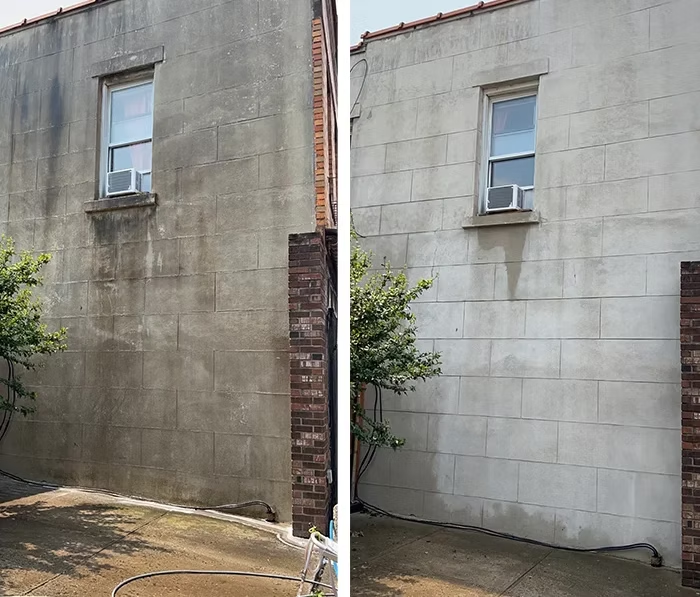
The business case for regular commercial power washing is often framed entirely around appearance — cleaner properties attract more customers and tenants, and that's true. But there's an equally compelling structural case for regular exterior cleaning that Bay Area property owners and managers should understand: uncleaned exterior surfaces deteriorate faster, and the repair costs dwarf the cleaning costs that would have prevented the damage.
How Biological Growth Damages Buildings
Algae and Moss on Concrete and Masonry
Algae and moss are not just cosmetically unpleasant — they are actively damaging the surfaces they colonize. As these organisms grow, they:
- Produce organic acids that etch into concrete and mortar
- Hold moisture against surfaces, accelerating freeze-thaw damage in colder Bay Area winters
- Work root structures into cracks and pores in masonry, expanding existing damage
- Create the conditions for lichen colonization, which is significantly more damaging and more difficult to remove
Concrete that has been colonized by algae and moss for years shows measurable surface degradation — pitting, erosion, and weakening of the top surface layer. This damage is not cosmetic and cannot be corrected by cleaning alone — it requires resurfacing or repair.
Mold and Mildew on Building Facades
Mold growth on building exteriors penetrates into substrate materials — particularly wood, painted surfaces, and porous masonry. Mold that has established deep roots in building materials cannot be fully removed by surface cleaning alone. At advanced stages, affected materials must be replaced rather than cleaned.
In the Bay Area's mild, moist climate, building facades that aren't cleaned regularly can develop mold infestations within 18–24 months of the last cleaning — faster near the coast or in shaded areas.
How Chemical Contamination Damages Paved Surfaces
Oil and Petroleum on Concrete
Motor oil, hydraulic fluid, and other petroleum products do not just stain concrete — they degrade it chemically. Petroleum hydrocarbons penetrate into concrete's porous structure and attack the chemical bonds in the cement paste. Over time, this creates:
- Softening and weakening of the surface layer
- Increased susceptibility to abrasion and wear
- Deeper penetration of water, accelerating freeze-thaw damage
- Surface spalling and delamination in severe cases
Concrete that has been oil-contaminated for years requires either grinding and resurfacing or complete replacement — costs that typically run $8–25 per square foot versus $0.15–0.50 per square foot for regular cleaning.
💰 The math on deferred maintenance: A parking lot that costs $2,000 per year to clean quarterly can require $40,000+ in resurfacing after 5–7 years of deferred maintenance. Regular cleaning is not an expense — it's a capital preservation strategy.
Bay Area-Specific Damage Factors
Salt Air Corrosion
Properties within several miles of the Bay or ocean face accelerated corrosion from salt air deposition. Salt attacks metal fasteners, embedded rebar in concrete structures, and metal components on building facades. Regular washing removes salt deposits before they can concentrate and penetrate into structural components. This is particularly important for parking structures, where embedded rebar corrosion is one of the most expensive structural failure modes.
Earthquake Grouting and Joint Sealants
Bay Area buildings have extensive expansion joints, control joints, and earthquake-resistant details that require sealants and grouting. Biological growth in these joints degrades sealant materials, allowing water infiltration and chemical attack on the underlying materials. Regular cleaning keeps these critical sealing elements accessible for inspection and protects their integrity.
Building Your Preventive Maintenance Case
For property owners and managers who need to justify cleaning budgets internally, the preventive maintenance argument is often more compelling than the appearance argument:
- Document current surface conditions with photographs
- Identify areas showing biological growth, staining, or surface degradation
- Get repair cost estimates for damaged areas to establish the cost of continued deferral
- Compare against the cost of a regular cleaning program
- Frame cleaning as capital preservation, not operating expense
We can help you assess your property's current condition and identify areas where cleaning intervention now will prevent significantly more expensive repair work later. Free property assessments available throughout the Bay Area.